
Caps & Closures Brings Closure Design Expertise to ProPak Asia 2026
June 2, 2026
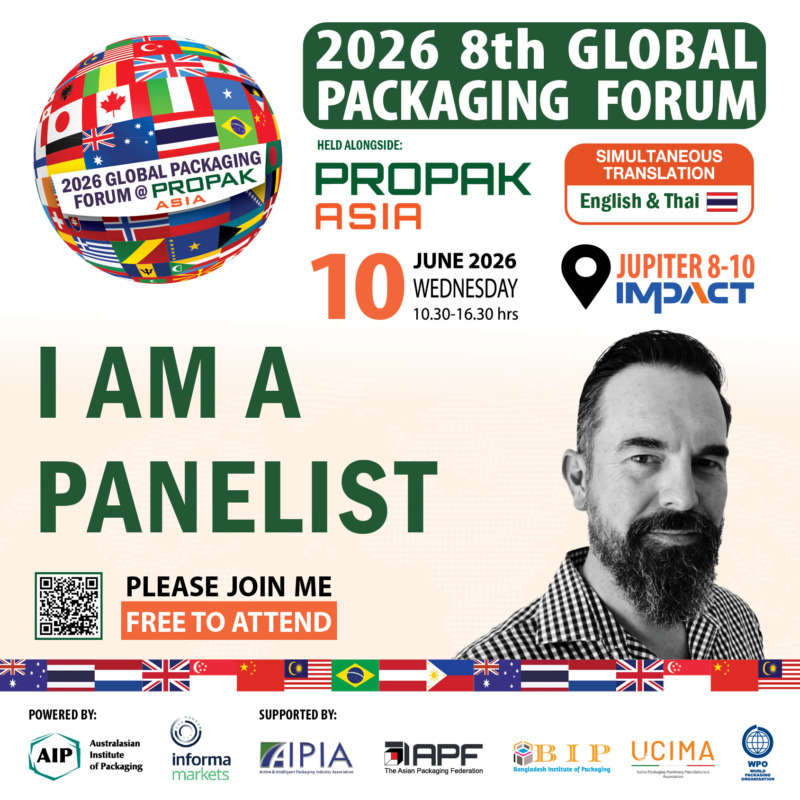
Caps & Closures will be represented at the 8th Annual Global Packaging Forum, held alongside ProPak Asia 2026 in Bangkok, Thailand, with Adam Waldron, Commercial & Business Development Manager at Caps & Closures, joining the speaker panel on Wednesday, 10 June 2026.
The Global Packaging Forum brings together packaging leaders, industry bodies, sustainability specialists and technical experts from across the region and around the world. This year’s program will explore some of the most important issues shaping the future of packaging, including recycling regulations, Extended Producer Responsibility, recycle-ready design, sustainable packaging innovation, material advancements and best practice examples from across the globe.
For Caps & Closures, Adam’s participation reflects the company’s continued involvement in regional packaging conversations, particularly where closure design, local manufacturing capability and practical circularity play a critical role.
A regional forum for the future of packaging
The Annual Global Packaging Forum is one of the key packaging conferences held alongside ProPak Asia, a major processing and packaging trade event in the region.
The 2026 forum will be held at IMPACT Muang Thong Thani in Bangkok, Thailand, and will feature global, regional and local perspectives on the future of packaging. The event will also include simultaneous translation in English and Thai, supporting broader participation across the region.
The forum provides an important platform for industry leaders to discuss how packaging is evolving in response to changing legislation, recycling infrastructure, consumer expectations, supply chain pressures and sustainability targets.
For businesses across the APAC packaging sector, these conversations are becoming increasingly important. Packaging decisions are no longer only about function, cost and appearance. They also need to consider regulatory readiness, material compatibility, recyclability, production efficiency and real-world recovery outcomes.
More than a cap
Caps & Closures has built its reputation around developing high-performance closure solutions for a broad range of industries, including food, beverage, health, personal care, household and industrial packaging.
As brands continue to rethink packaging through the lens of sustainability and circularity, caps and closures are becoming a more important part of the conversation. A closure is not simply a finishing component. It can influence product protection, consumer experience, tamper evidence, dispensing performance, line efficiency, cap retention, recyclability and the overall success of a packaging system.
Adam’s role on the panel gives Caps & Closures an opportunity to contribute a practical perspective on manufacturing and closure design to a broader regional discussion. This is particularly relevant as the APAC market continues to respond to global trends, including supply chain volatility, changing legislation and increasing expectations around recycle-ready packaging.
Key topics shaping the closures market in APAC
The panel discussion will address several issues influencing the packaging and closures market across the region. Among the most important are supply resilience, legislative readiness, and the need to design packaging systems that perform effectively in real-world recycling environments.
While the regional closures market continues to present opportunities for functional, compliant and sustainable packaging solutions, those opportunities are increasingly shaped by how well brands and manufacturers respond to changing global conditions.
Supply chain resilience and material innovation
Global supply chains continue to face pressure from geopolitical disruption, freight uncertainty, material availability and shifting market conditions. For packaging manufacturers and brand owners, these challenges reinforce the importance of resilient supply strategies, material flexibility and strong supplier relationships. In this environment, material innovation can play an important role. Caps & Closures’ Oysterlean demonstrates how alternative-material thinking can support more resilient packaging strategies by reducing reliance on conventional oil-based plastics while offering broader compatibility and greater cost stability.
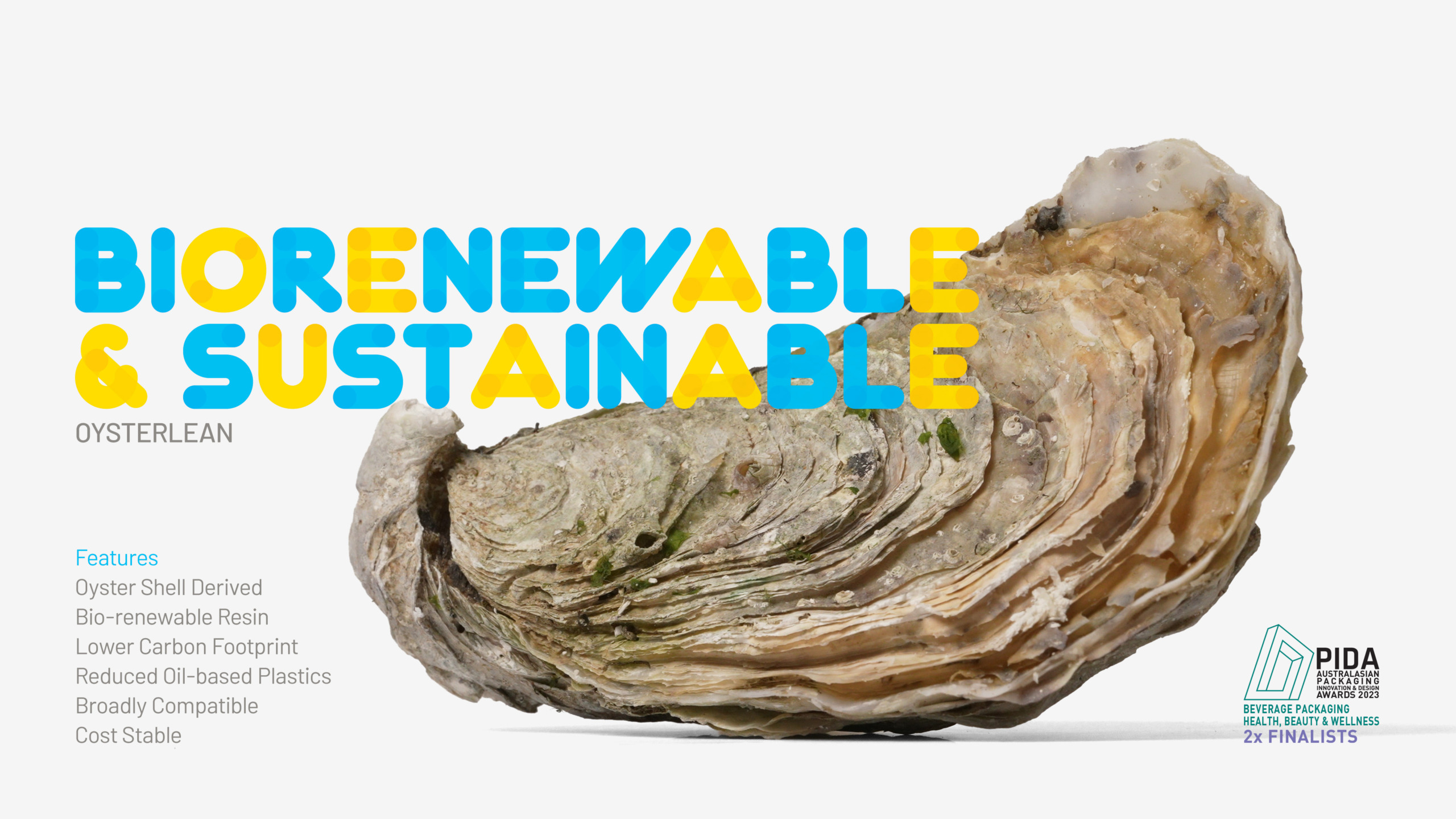
Oysterlean demonstrates how alternative material innovation can support more resilient packaging strategies by reducing reliance on oil-based plastics and improving cost stability.
Tethered cap legislation and high-speed production
Tethered cap legislation has gained major traction globally, particularly through European Union mandates. While different regions may move at different speeds, APAC has an opportunity to prepare early rather than respond under pressure later. Caps & Closures’ TetherSafe highlights how tethered closure design can support integrated tethering, tamper-evident assurance, and mono-material construction while addressing the need for litter-minimising packaging solutions. The challenge for the industry is not simply adopting tethered formats. It is developing tethered closure systems that remain practical for high-speed bottling lines, are compatible with suitable neck finishes, and are effective for the consumer.
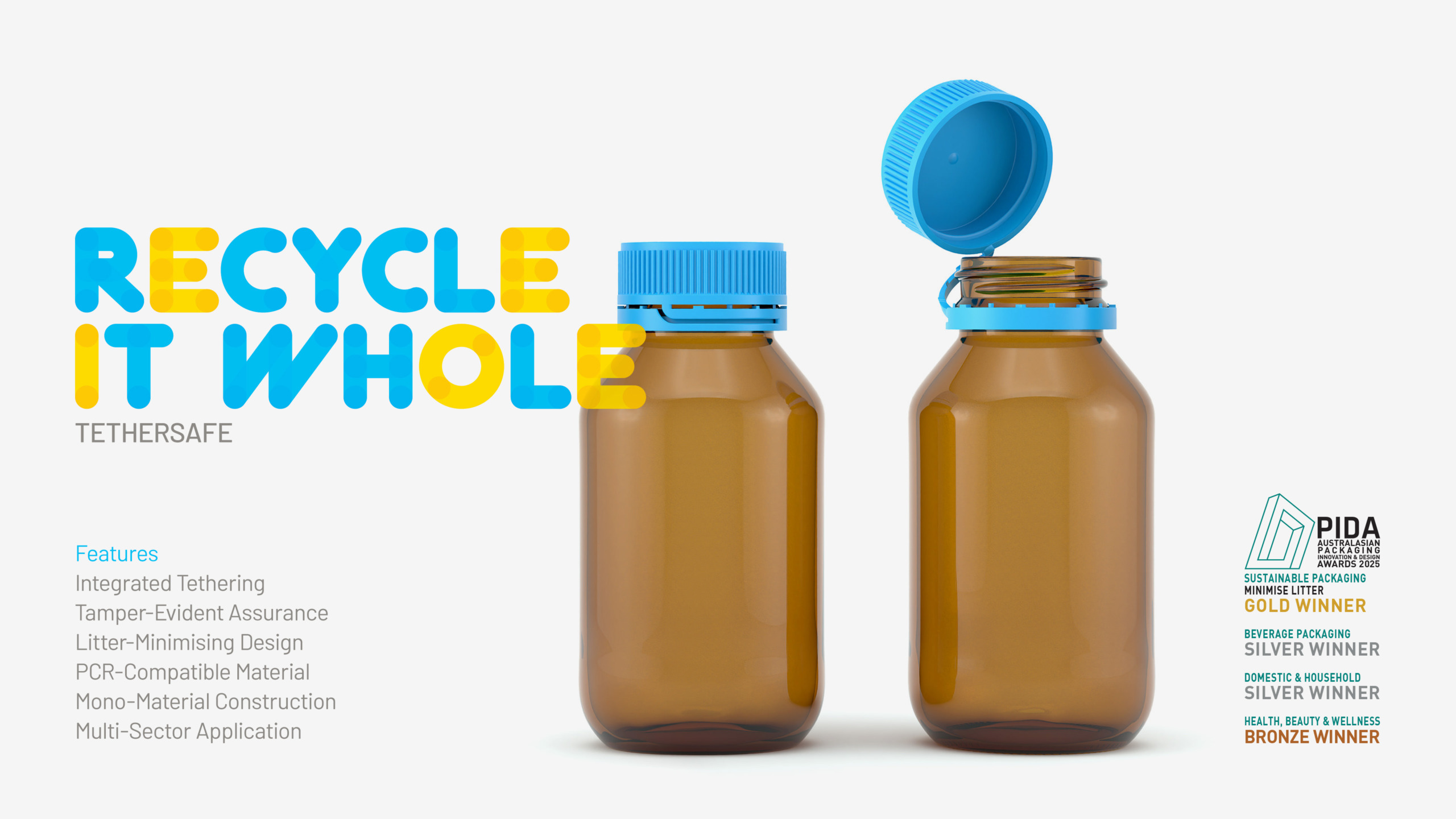
TetherSafe shows how tethered closure design can support legislative readiness, tamper evidence and litter-minimising packaging outcomes.
Whole-pack recyclability in practice
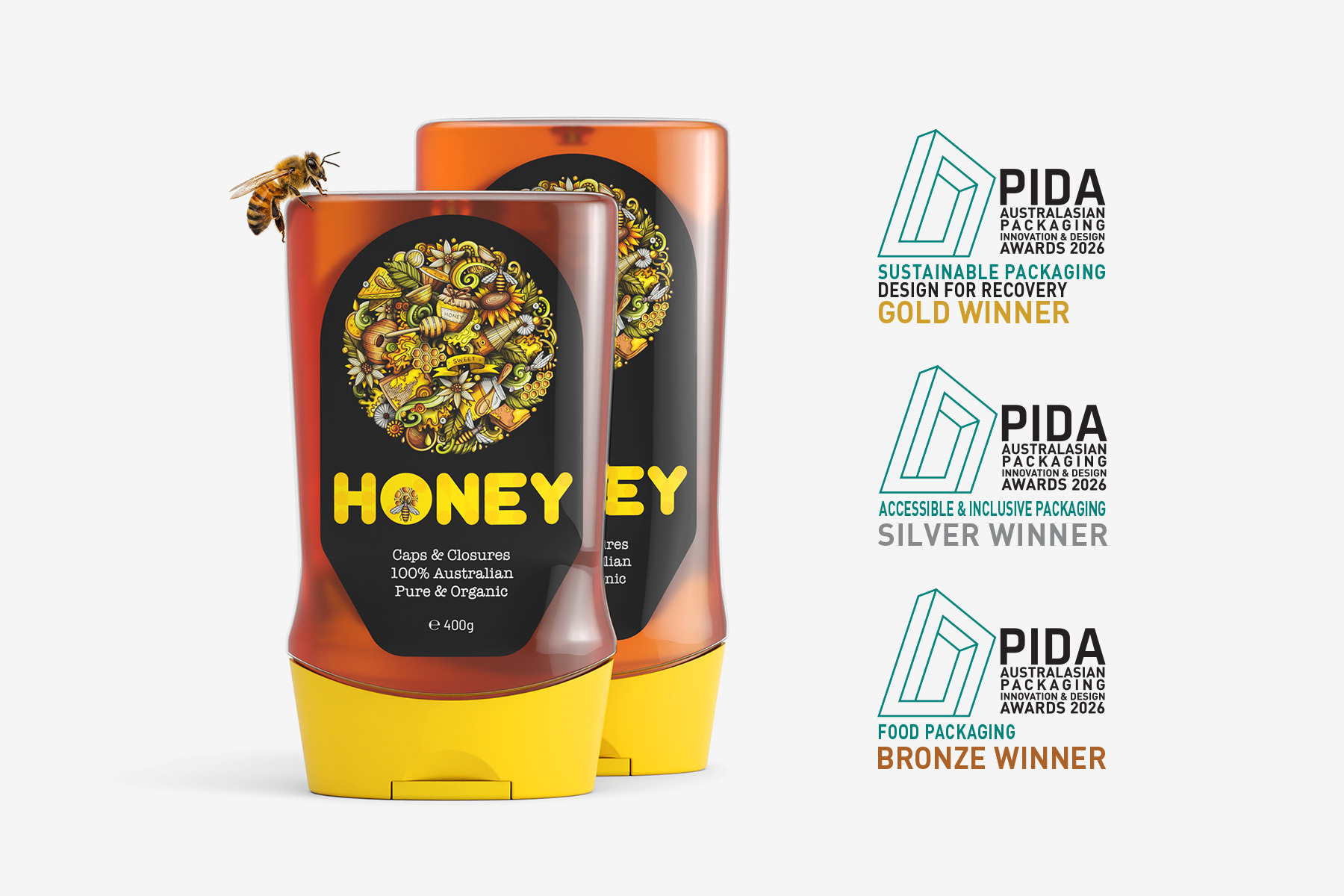
Recycle-ready packaging is often discussed in relation to the primary container, but the cap, closure and dispensing components also play an important role in determining whether an entire pack can be successfully sorted and recycled. This is where complete system design matters. Caps & Closures’ Honey Squeeze Pack demonstrates how a recyclable pack system can combine consumer convenience with more circular packaging design, including a fully recyclable dispensing valve, lightweight construction and the option for up to 100% PCR content. The Honey Squeeze Pack is a strong example of how packaging circularity depends on the performance and compatibility of the entire pack, not just a single component.
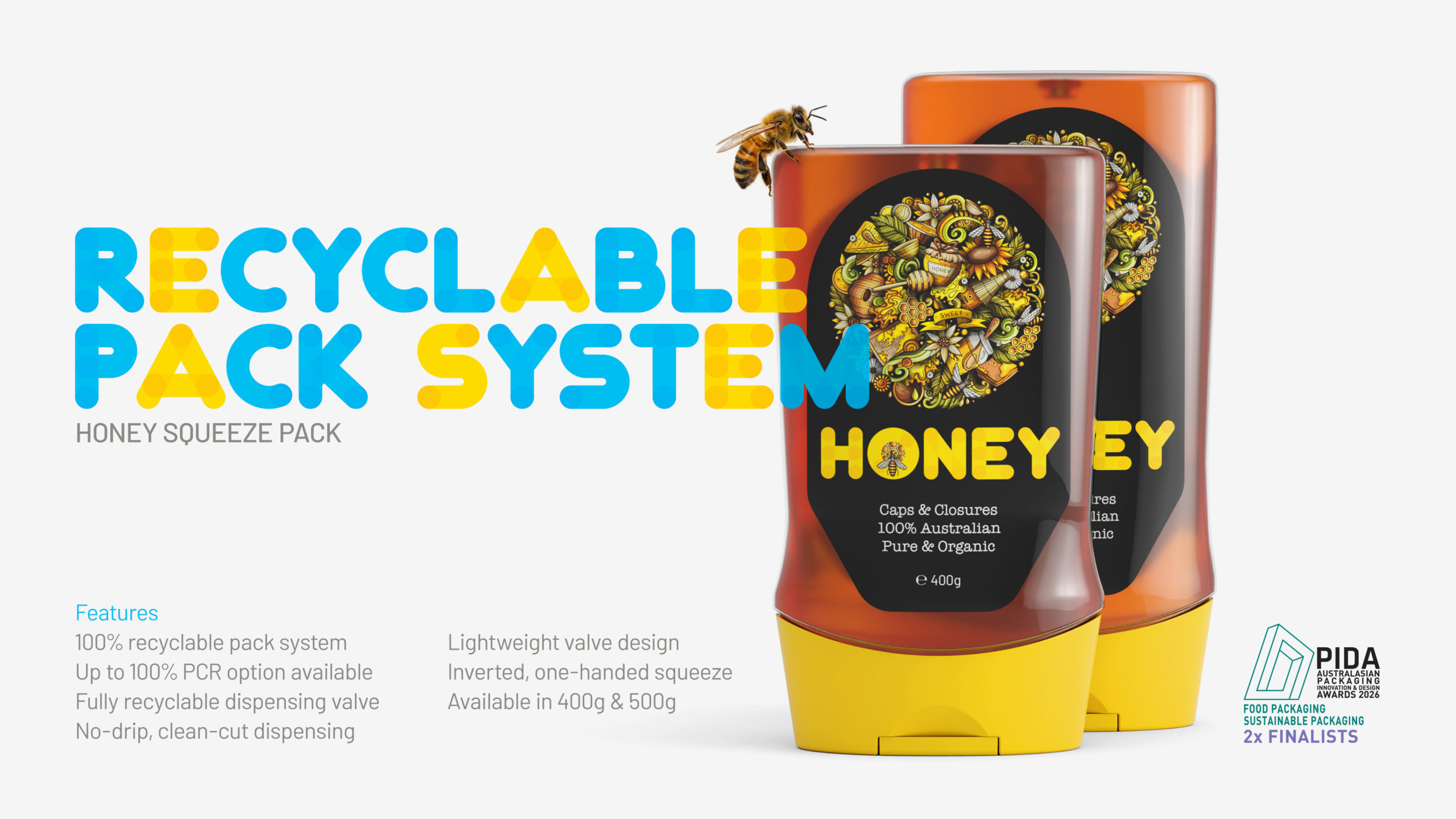
Honey Squeeze Pack highlights the importance of whole-pack design, combining recyclability, consumer convenience and a fully recyclable dispensing system.
Designing closures for practical circularity
Designing for circularity requires more than choosing a recyclable material. It requires understanding how every component of the pack performs through the full packaging lifecycle. The cap must protect the product, function properly for the consumer, withstand the demands of manufacturing and distribution, and remain compatible with the intended recovery pathway. When the cap, container and material choices are designed together, the result is a more practical and commercially viable packaging solution.
This systems-based approach is especially important as more brands work towards packaging that is recyclable, reusable, recoverable or made with recycled content. The closure must support those goals without compromising product integrity, safety, usability or production performance. For Caps & Closures, this reflects a broader design philosophy: better packaging outcomes are created when technical performance, manufacturing practicality and sustainability considerations are developed together from the beginning.
Supporting practical packaging progress across APAC
Caps & Closures is proud to have Adam Waldron joining the 2026 Global Packaging Forum and contributing to discussions that are directly shaping the future of packaging across the region.
As packaging expectations continue to evolve, closure design will remain an important part of creating packs that are functional, efficient, compliant and aligned with circular economy goals. From supply chain resilience and tethered cap readiness to material compatibility and whole-pack recyclability, caps and closures play a practical role in helping brands respond to changing market and regulatory demands.
Through events such as the Global Packaging Forum, Caps & Closures continues to engage with the broader packaging industry and support conversations that lead to better, more scalable packaging outcomes.